About Cavaliers as Companions Blog

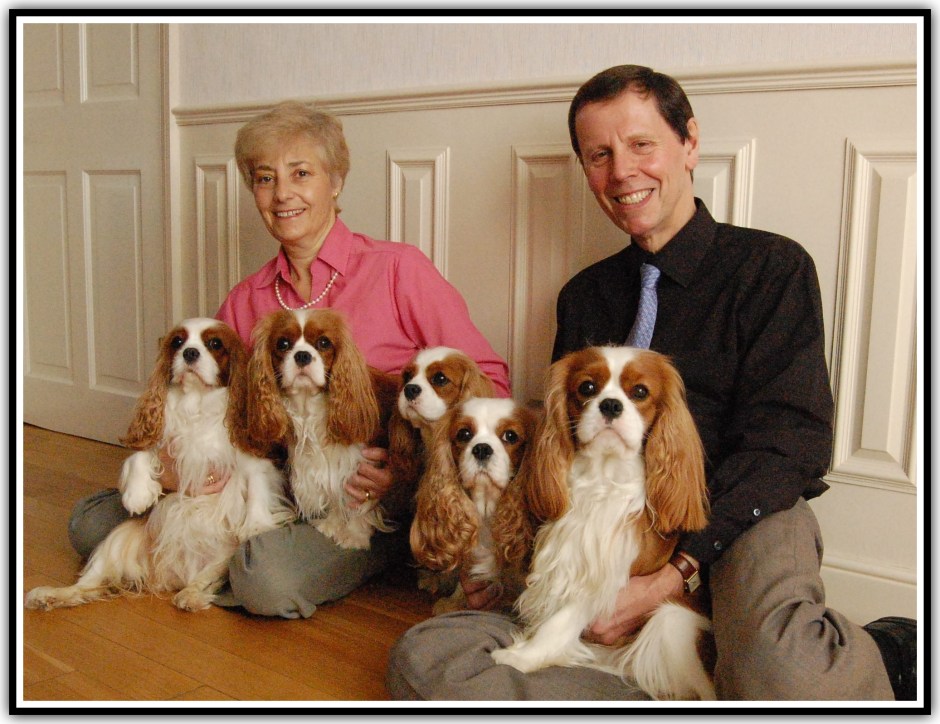
Cavalier as Companions features articles by Dennis and Tina Homes that highlight the Cavalier King Charles Spaniel as a much loved companion pet.

Since 2007 Dennis and Tina have been writing the “Cavaliers as Companions” page for the UK Cavalier Club website. There is a lot of coverage on various websites about the achievements of Cavaliers in the show ring, but they felt that it was high time to highlight Cavaliers as much loved companions. After all, the overwhelming majority of Cavaliers are pets. Their articles are posted on the Cavalier King Charles Spaniel Club UK website every other month.

Since 2008 Dennis has been writing the regular “News from the UK” pages in the American glossy magazine “The Royal Spaniels.”


The February / March 2019 Articles are now online on the UK website for you to enjoy. This blog features excerpts from those articles. If you’d like to read more of their articles click here. When the page opens, you’ll find a link in the right side menu.


Crate Training

Some people are none too keen on crate training a puppy, but if used correctly it can be a great tool to aid house training.

It is important that the crate should be big enough for the puppy to stand up, turn around, and lay down comfortably, but not too big that he can go and sit in a corner away from any potential mess. You should never, ever use the crate as a punishment. The puppy should be able to regard the crate as his own special place where he can rest and feel a sense of security and comfort. When first introduced you should put in a comfortable blanket, some favourite toys and a few special treats. He must always have access to water and the type of drinking bowl that clips on to the side of the crate is idea as it avoids spillages.

The crate can be used to keep your dog confined when you are not able to supervise him. Since most dogs will not mess in the same place they sleep, your dog will most likely try to hold it when he is confined to his crate. This prevents him from getting in the bad habit of having accidents in your home. However, you must regularly take the puppy out of the cage and let him go outside to relieve himself and then praise him when he has done his business. This way a puppy will quickly learn where to go to the toilet. Once the puppy becomes used to the crate you will find that by leaving the door of the crate open the puppy will return to it of his own accord whenever he feels that he needs to rest. A crate is probably the safest way to transport a dog when travelling in a motor vehicle.

Dennis and Tina Homes

This is an excerpt from “Cavaliers as Companions” February/ March 2019

Click here to read more articles

When It’s Time To Say Goodbye

Farewell, so long, goodbye. How many words do we use when parting?

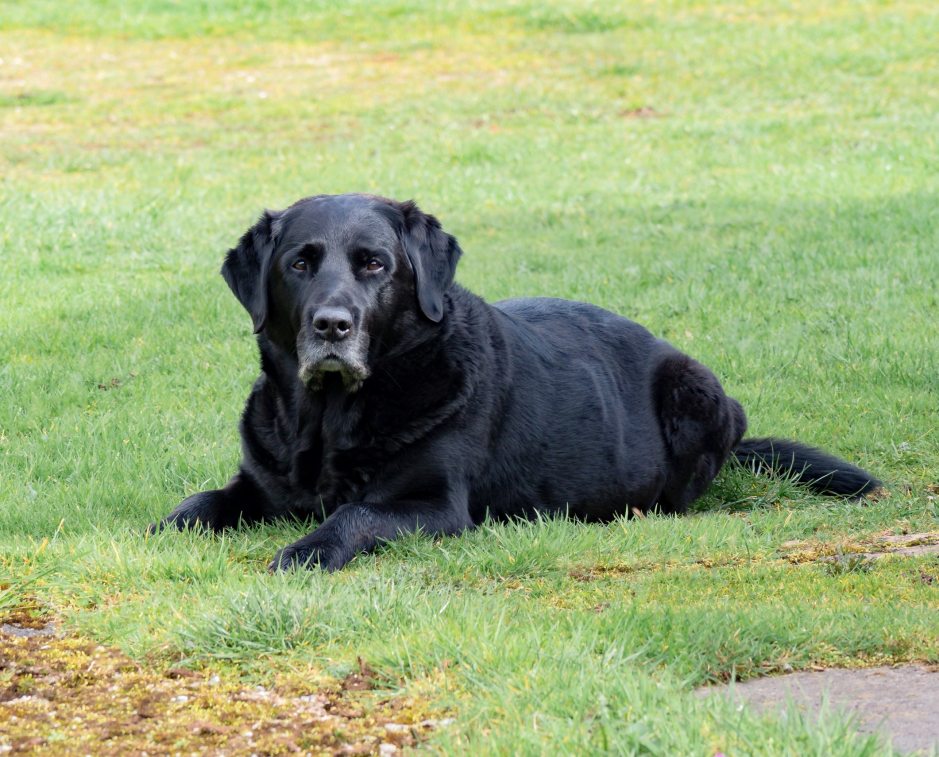
Some have a little more finality than others, and these often are the hardest to use. Saying farewell to a loved one is never easy, and that is equally so when it comes to our canine friends. I was particularly touched just recently on reading of the plight of an elderly lady who lived on her own. She had a very old Labrador that was quite unwell. The lady knew this and avoided as long as she could the day when she would have to ask her Vet to do the only kindest thing. Sadly the RSPCA got to hear of this, and the lady was hauled before the courts charged with cruelty. I can see this story from both sides. The lady loved her friend so much that she knew she would be bereft without her. Perhaps, she also didn’t quite understand how bad the old dog’s quality of life was. This scenario is probably quite a usual thing amongst pet owners. Indeed, Dennis and I have had to face this on more than one occasion. We cling on and hope that tomorrow will bring a better day, but in spite of this the inevitable must be arrived at, and that is knowing just when is the right time to say that final goodbye.

Some of us have been blessed from time to time, when we have lost our dogs through old age, when they have been stolen away in their sleep. There are others which have met with a fatal accident and whilst these experiences are never without pain for us, we have at least been saved from that final act. Our own Vet has helped us in the past with our decision, but it is always the owner who has to have the final say, and knowing when the time is right is never easy. The dog as we know it is a stoic creature. It will battle on in spite of pain and infirmity. Perhaps this is an inherent passed from its ancestors, where if a dog shows it is ailing, it will be set upon by his pack making his dispatch much faster. The Veterinary profession will all agree that the right time is when your dog stops eating. That it may need much encouragement to eat, only to vomit the food back up again. Their joy and love of life is dulled and they become disinterested in taking their daily walk. Then of course the dog may be in considerable pain from some debilitating condition and no amount of medication will ease the discomfort. Whichever malaise affects our furry friends we have to make that final sacrifice and say goodbye. When we have said that hardest word of all, we are momentarily in a state of relief, knowing that our friend is now without pain. However, for some of us there is no consolation. Bereavement is one of the saddest periods in our lives to go through. It is an emotion that will strike many when it comes to our dogs. We should never feel guilty about our feelings. There are many cultures that can never understand why we should mourn the loss of a dog, and some will be derisory in their feelings towards us. These people are bereft of never sharing or understanding the unconditional love and sense of being that our dogs bring to our lives. Treasure you dog’s memory. You may have lost him, but you will be all the richer in mind and spirit for having known and loved him.

Dennis and Tina Homes

Socializing a Puppy

One of the main causes for bad behaviour among dogs is the lack of socializing when it was a young puppy. Aggressive behaviour, nervousness, howling, destructiveness and lack of house training often have their root cause in the way that the dog was first brought up as a puppy.

A young puppy needs to be exposed to as many different and new experiences as possible to prepare them for later life. Dogs that have not had this early socialisation may grow up to be fearful of people, things and places and this can lead to many problems including aggression. Socialisation can be described as the process whereby an animal learns how to recognise and interact with the species with which it cohabits. In the wild this is likely to be limited to the animal’s own species, but for the domestic dog it includes other species such as humans and cats. By learning how to interact with other creatures the socialised dog develops communication skills which enable it to recognise whether or not it is being threatened and how to recognise and respond to the intentions of others. A properly socialized puppy is well adjusted and makes a good companion. It is neither frightened by nor aggressive towards anyone or anything that it would normally meet in an everyday situation. An un-socialized dog is untrustworthy and can be a liability. They often become fear-biters. Often they like to fight with other dogs. They are difficult to train and are generally unpleasant to be around. Dogs that have not been properly socialized cannot adapt to new situations and a simple routine visit to the vet is a nightmare not only for the dog itself, but for everyone involved.

Socialization most easily occurs before the puppy is 3 months old. Any later than that and it becomes an extremely difficult and time-consuming process. When you first introduce a new puppy into your home it is important to get it accustomed to many different sights and sounds. Slowly introduce it to the things in your household. If your puppy growls at an object or person, do not pick him up and cuddle him. This reaction will be rewarding to your puppy, and will intensify the dog’s behaviour. It will teach him that the way to react to fear is to growl. Growling can lead to biting. The puppy should be corrected, much like a mother dog would do to her own puppy. It is important to be firm and consistent. Tell him ‘NO’ and then show him the object and reassure him that there is nothing to be fearful of. Take your puppy out as often as you can. We realise that a puppy cannot be walked in the street until it has had its course of injections, but you can still carry him in your arms and walk him down the road to accustom him to things like traffic. Show him all kinds of sights, sounds, people and animals, but do be careful when introducing your puppy to other dogs and animals if you are unsure of their behaviour. Know your dog’s traits and use your best judgment. Always correct your puppy if he shows any signs of aggression or domination toward another animal or person. Do not dismiss it as being cute behaviour. Teach your children to respect the puppy, and teach your puppy to respect your children. Never tolerate growling. Growling is unacceptable and can be the first sign that your dog thinks he is, or is trying to be the top dog in the pack and you must ensure that he knows that you are top dog.

It is also a good idea to introduce friends over to meet your pup so that it soon gets used to seeing lots of different people such as old people, young children, men and women. Once the puppy has had its vaccinations allow it to meet other friendly dogs and even dog friendly cats. Even before it has had its injections you could carry him to places where there is lots of activity such as a shopping area or outside a school playground. Make a fuss of the puppy and he would become oblivious to all the hubbub and simply think that it’s all fun. It is also very important to take the puppy on short car rides, even if it is a quick drive around the block. One of the main reasons why dogs suffer from car sickness is because they were not introduced to car journeys as young puppies. Introduce your puppy to all manner of items such as umbrellas, bags, boxes, the vacuum cleaner, etc. Encourage your puppy to explore and investigate his environment and also introduce to new and varied sounds. Loud, obnoxious sounds should be introduced from a distance and gradually brought closer. Even though he may not have much coat you should still get him used to being brushed and groomed each day and also get him used to a toothbrush even if you just rub it very gently against his tiny teeth for a few moments as you make a fuss of him. This way he will get used to the brush as he gets older and requires regular brushing.

Dennis and Tina Homes